
What is Non-Profit Bookkeeping
Non-profit bookkeeping is the process of keeping clear and accurate records of all a charity’s financial activities. It tracks donations, expenses, and grants to ensure every dollar is used responsibly. This helps the organization stay organized and transparent in its financial dealings.
Unlike regular business bookkeeping, nonprofit bookkeeping focuses on accountability and following donor restrictions. Methods like fund accounting separate and track money for specific purposes. This ensures compliance, maintains tax-exempt status, and builds trust with donors and supporters.
Why is Non-Profit Bookkeeping Important?
For nonprofit organizations, bookkeeping goes beyond tracking money, it ensures financial health, transparency, and mission focus. It helps track where funds come from and how they’re used and ensures they’re spent responsibly. With hiring a right bookkeeper for nonprofit organizations or using nonprofit accounting software, accurate bookkeeping forms the foundation for everything else.
Staying Legal and Compliant
To maintain their tax-exempt status, non-profit organizations must adhere to tight guidelines. In Canada, this entails filing the T3010 form every year, but in the United States, it is the Form 990. A bookkeeper for non-profit organizations assists in gathering all of the information required for these reports, ensuring that no details are overlooked. If you’re not sure where to begin, our common bookkeeping mistakes guide can show you how you can avoid costly penalties.
Building Donor Trust with Transparency
People donate to NPO because they trust that organization to use funds responsibly. Nonprofit bookkeeping services and effective accounting practices ensure clear records, demonstrating exactly how money is spent. This transparency reassures donors, strengthens your reputation, and encourages continued support.
Making Smart Decisions with Your Finances
Effective bookkeeping for nonprofit organizations is a decision-making tool. When accounts are frequently updated and expenses are documented, management can plan budgets, manage resources efficiently, and assess program costs. Hiring a right Ottawa accountant can help you make smart decisions for your organization.
Improving Access to Grants and Funding
Funders want confirmation that you can manage your money appropriately. Nonprofit bookkeeping and accounting demonstrate financial stability, which makes obtaining grants or significant donations simpler. Using accounting software or hiring an accountant can help you in the long run for improving your grants and funding.
Choosing the Right Tools and Support
Financial management does not have to be overwhelming. With the right tools and support from professional nonprofit bookkeepers, you can easily organize your data. Because we know that the right approach, matters and bookkeeping is not just about the numbers and more about assisting your nonprofit to succeed.
These resources can help you make an informed decision for your nonprofit organization:
Difference Between Non-Profit Bookkeeping and Non-Profit Accounting
If you’re new to handling finances for a charity or a nonprofit organization, it’s important to understand that bookkeeping and accounting, while closely related, are not the same. For nonprofits, bookkeeping is the daily monitoring of funds coming in and going out. A nonprofit bookkeeper manages donations, pays bills, categorizes expenses, and keeps everything organized. The hands-on aspect of finances serves as the foundation of your nonprofit’s financial health.
While accounting for non-profit organizations focuses on the bigger picture, it uses data from bookkeeping for nonprofits in Ottawa or elsewhere to create financial statements and analyze trends. It explains the “why” behind the numbers, ensures compliance, and helps your nonprofit plan, measure performance, and make informed decisions. Nonprofit accountant services often use tools like nonprofit accounting software to simplify this process.
Non-profit Bookkeeping vs Non-Profit accounting
Aspect | Non-Profit Bookkeeping | Non-Profit Accounting |
Focus | Day-to-day recording of donations, expenses, and transactions | Analyzing and interpreting financial data to understand trends and performance |
Purpose | Keeps financial records organized and accurate | Provides insights for decision-making and planning |
Tools | Nonprofit accounting software, spreadsheets, bookkeeping services | Financial statements, reports, audits, strategic analysis |
Who Does It | Bookkeeper for non-profit | Non-profit accountant services or accounting team |
Goal | Ensure accurate, up-to-date records for transparency and compliance | Measure financial health, plan budgets, and guide strategic decisions |
What Does a Non-Profit Bookkeeper Do for NPO?
A bookkeeper for nonprofit organizations plays a crucial role in keeping finances organized and transparent. Unlike accountants, bookkeepers focus on the day-to-day tracking of income and expenses, ensuring donations, grants, and program fees are recorded correctly. Nonprofit bookkeepers keep accurate records that comply with the fund accounting rules, distinguishing restricted and unrestricted funds for compliance purposes. In order to comply with legal and donor obligations, bookkeeping for non-profit organizations across Canada depends on the work of nonprofit bookkeepers.
Financial Cash Flow Management
A non-profit bookkeeper constantly compares bank statements with recorded transactions to avoid mistakes and corruption. They also manage financial flow by keeping track of accounts receivable and payable, ensuring that invoices are paid on time, and collecting pledged gifts or grants. This guarantees that the organization works smoothly and is financially stable.
Compliance, Grants, and Reporting
Nonprofit bookkeepers help with compliance by tracking grants, completing reporting deadlines, and generating formal donation receipts. They create internal reports such as the Statement of Activities to assist leaders in making informed decisions. Nonprofit accounting services and bookkeeping in Ottawa frequently rely on these data to ensure openness and donor trust
Payroll and Required Obligations
Non-profit bookkeeping services include payroll management and mandatory remittances. Bookkeepers handle taxes, calculate wages for staff, and make sure government contributions are timely and precise. This thorough procedure prevents penalties and assures complete compliance with employment and tax regulations.
What are the best practices of nonprofit bookkeeping?
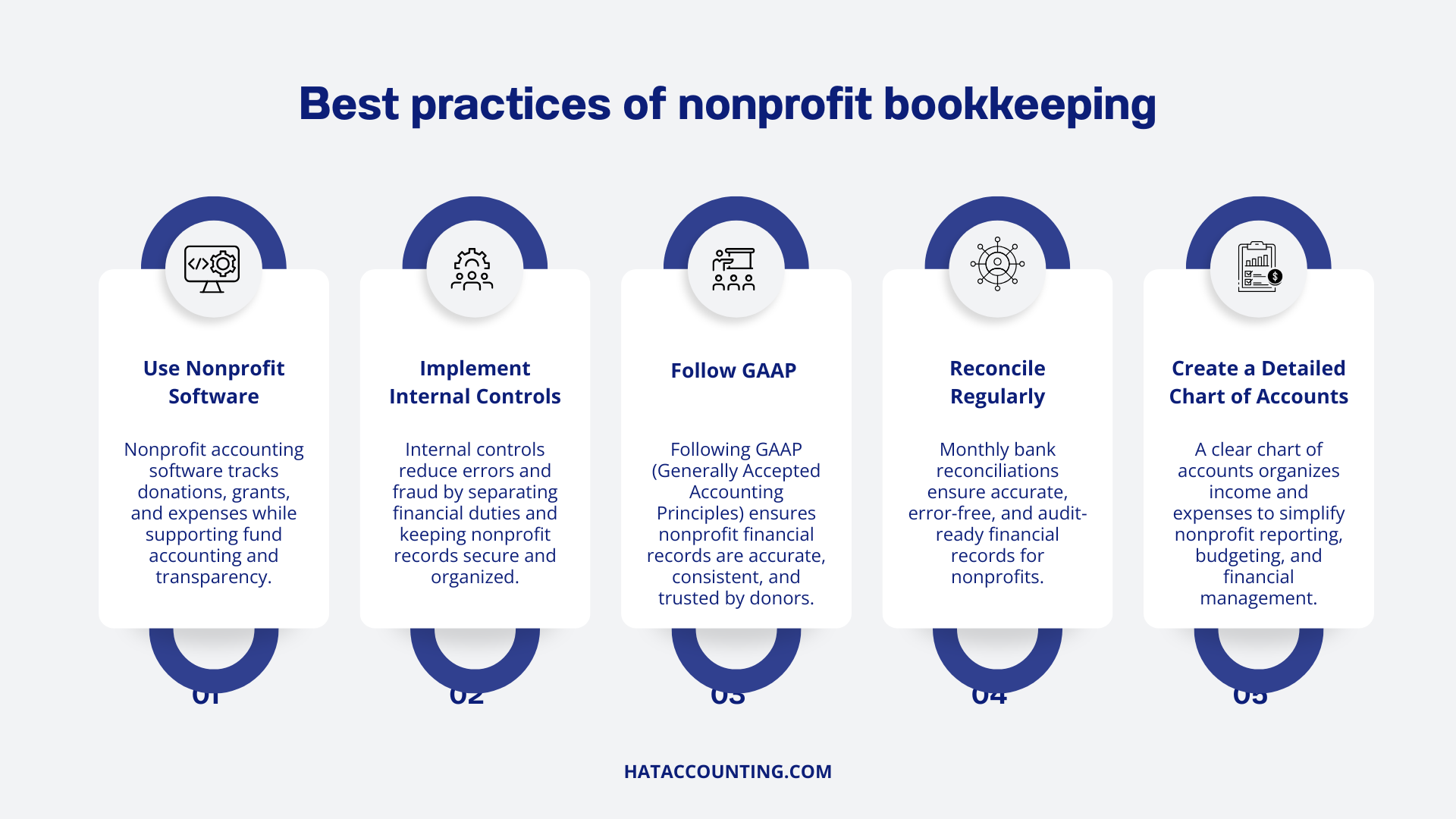
Good nonprofit bookkeeping is more than tracking numbers, it’s about building a reliable financial system that supports transparency, compliance, and informed decision-making. Following these core practices ensures your organization remains financially healthy and trustworthy.
Use Nonprofit Software
Investing in nonprofit accounting software helps track donations, grants, and expenses accurately. These tools support fund accounting, making it easy to separate restricted and unrestricted funds, generate reports, and maintain transparency. Many non profit organizations rely on such software alongside professional non-profit bookkeeping services to simplify their finances.
Implement Internal Controls
Internal procedures help avoid bookkeeping mistakes and fraud by assigning financial duties across multiple people. For instance, one person records transactions, another approves payments, and yet another handles cash. Bookkeeping for nonprofit organizations frequently collaborates with accounting services for nonprofit organizations to keep cash secure and structured.
Follow GAAP
Following GAAP (Generally Accepted Accounting Principles) guarantees that your nonprofit’s financial records are clear, uniform, and reliable. It enables you to accurately record financial information, meet legal requirements, and develop trust with donors and fundraisers. In short, proper nonprofit bookkeeping combined with GAAP, simplifies and improves financial management.
Reconcile Regularly
Monthly bank reconciliations are necessary to ensure that your books match real bank transactions. Regular reconciliation helps to prevent errors, identify differences early, and make records audit-ready. Look for the best nonprofit bookkeeping services to preserve accuracy and transparency.
Create a Detailed Chart of Accounts
A clear chart of accounts categorizes income and expenses by fund type, program, and functional category (program, administration, fundraising). This framework simplifies reporting, budgeting, and financial analysis, and it is an essential component of bookkeeping for nonprofit organizations.
Conclusion
Bookkeeping is the backbone of a nonprofit’s financial operations. It ensures transparency, supports compliance, and provides the data needed to make smart decisions. By maintaining accurate and organized financial records, nonprofits can focus on what matters most, Professional nonprofit bookkeeping advances their mission and serves their communities with confidence and integrity.
Get Professional Non-Profit Bookkeeping Today
Looking for reliable nonprofit bookkeeping services near you? Partner with a recognized nonprofit bookkeeping and accounting firm today and take the first step toward operational excellence and financial peace of mind.
FAQs
What are the top cloud-based bookkeeping platforms for small charities?
Popular options include QuickBooks Online and Xero. These platforms support fund accounting, track donations, and generate reports, making them ideal for small nonprofits.
What is the basic accounting for nonprofit organizations?
Basic accounting involves recording income, expenses, and grants; separating restricted and unrestricted funds; and preparing simple financial statements to track the organization’s financial health.
How to choose bookkeeping services tailored for Canadian nonprofits?
Look for services experienced with Canadian nonprofit regulations, fund accounting, and tax-exempt reporting. Reviews, local reputation, and familiarity with nonprofit accounting software in Ottawa can guide your choice.
How to track donations and grants in nonprofit organization software?
Nonprofit accounting software allows you to categorize funds, record donor restrictions, and generate reports. This ensures transparency and accurate tracking of all contributions and grants.
Do nonprofits have to use fund accounting?
While not always legally required, fund accounting is strongly recommended. It separates restricted and unrestricted funds, helping nonprofits stay compliant and manage donations responsibly.